
CIRCULAR BY DESIGN
Nothing leaves our gate as waste.
An integrated bio-hub at Bachai, Narsinghpur — sugar, ethanol and power on one site, with compressed biogas under development — where every residue becomes the next process’s raw material, and what remains goes back to the soil.
Six stages
Bachai · Narsinghpur · Madhya Pradesh
The loop
At Bachai, in Narsinghpur district of Madhya Pradesh, we operate a sugar mill, a grain distillery and a bagasse-fired power plant on a single site — and we are now building a Compressed Biogas plant alongside them. They are not four businesses that happen to share an address. Each one runs on what the one before it leaves behind. Cane becomes sugar. The fibre left after crushing becomes the power and steam that run the entire complex. The filter cake pressed out during juice clarification becomes vehicle-grade fuel. What comes out of the biogas digester goes back to the fields it came from, as organic manure, to grow next season’s crop. The loop closes on the same farms, with the same farmers, moved by the same trucks.
- 01 — Cane in. Farmers across our command area deliver cane to the mill.
- 02 — Sugar. Cane is crushed and the juice clarified into sugar, at 8,000 TCD. Sugar to market; bagasse and press mud kept as feedstock.
- 03 — Power from our own fibre. Bagasse is fired to raise steam and generate electricity, 36 MW installed. Power and steam to the mill and the distillery; ~10 MW exported to the state grid.
- 04 — Ethanol. Maize becomes fuel-grade ethanol for India’s blending programme, 300 KLPD. Ethanol to oil marketing companies; DDGS as cattle feed.
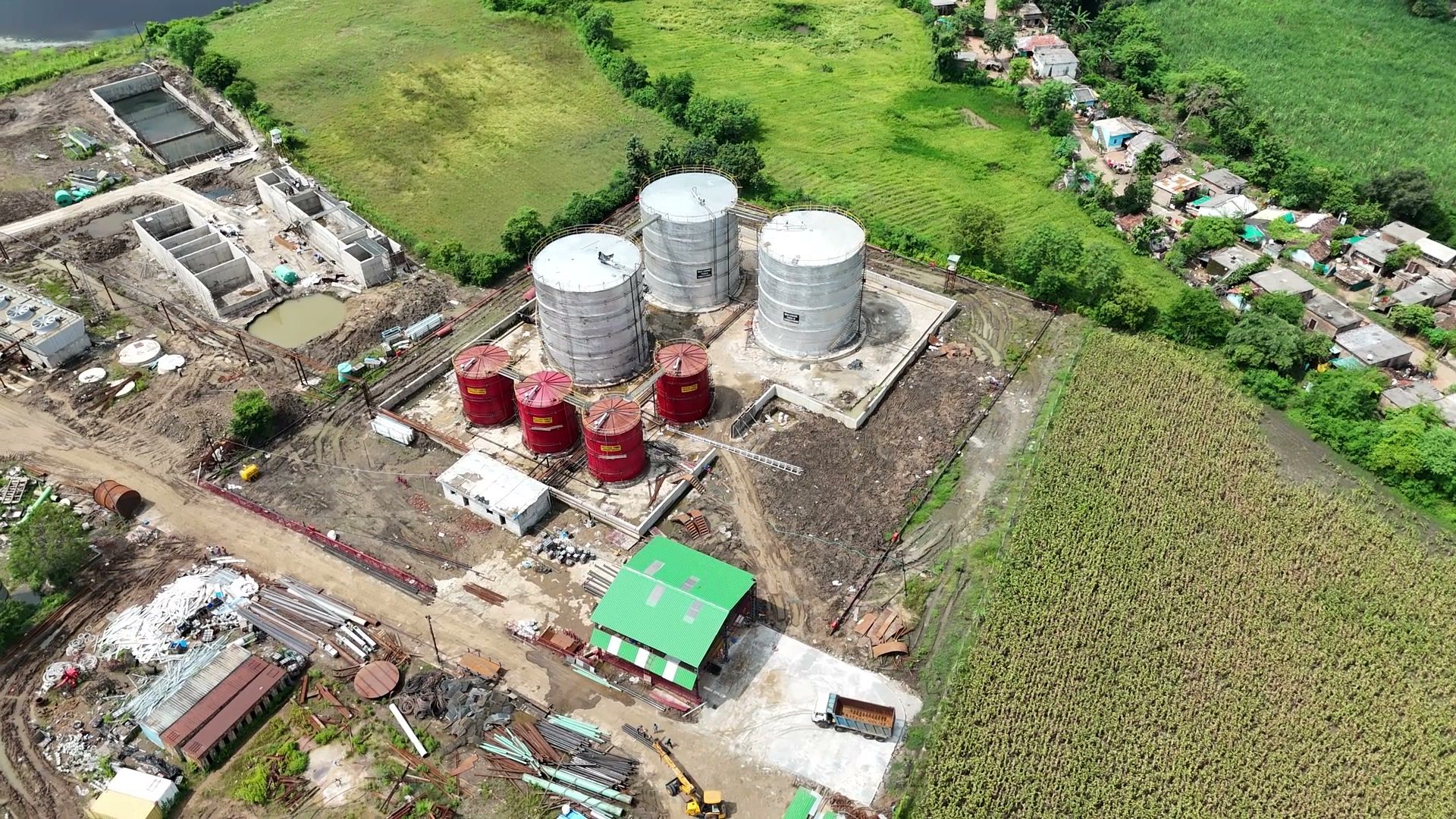
- 05 — Compressed Biogas — under development. Press mud is digested and upgraded to over 96% methane, 15 TPD. Off season the plant switches to cane trash and maize stover. Compressed biogas to market.
- 06 — And back to the field. Fermented organic manure returns to the farms that supplied the feedstock, closing the loop.
- 01
Cane in
Farmers across our command area deliver cane to the mill. This is the beginning of every other process on site, and the relationship that everything else is built on.
- 02
Sugar
Cane is crushed and the juice clarified into sugar. Two things come out of this stage that most mills treat as problems to be disposed of: bagasse, the fibre left after crushing, and press mud, the filter cake removed during clarification. We treat both as feedstock.
- 03
Power from our own fibre
The complex is not powered by coal or by grid electricity — it is powered by the residue of the cane the farmer delivered that morning. Our energy cost is a by-product of our own process.
- 04
Ethanol
Our grain distillery converts maize into fuel-grade ethanol for India’s blending programme, running on steam and power from the cogeneration plant next door.
- 05
Compressed Biogas Under development
Our CBG plant will take press mud from our own mill and from neighbouring mills, digest it, and upgrade the resulting biogas to over 96% methane — a fuel meeting IS 16087 and interchangeable with CNG.
Off-season — cane trash & maize stover from the same farms.
- 06
And back to the field
What comes out of the digester is not waste. It is Fermented Organic Manure, recognised under the Fertiliser Control Order, and it goes back to the farms that supplied the feedstock.
What this displaces.
Alongside that, digesting press mud instead of open-composting it prevents methane release, and paying for crop residue prevents open-field burning.
Circular economy is a phrase most companies apply to a recycling initiative. For us it is the plant layout. The mill’s fibre powers the distillery. The mill’s filter cake becomes vehicle fuel. The digester’s residue becomes fertiliser for the farms that started the cycle. We are not adding sustainability to an industrial process — the process is the mechanism.

The supply chain
The same farmers, the same trucks.
The integration that matters most is not between our plants. It is between our plants and the farms around us. We already know these farmers. We already have contracts with them for cane and for maize. Our procurement teams already visit their villages, our harvesting equipment already works their fields, and our trucks already run those roads every day of the season.
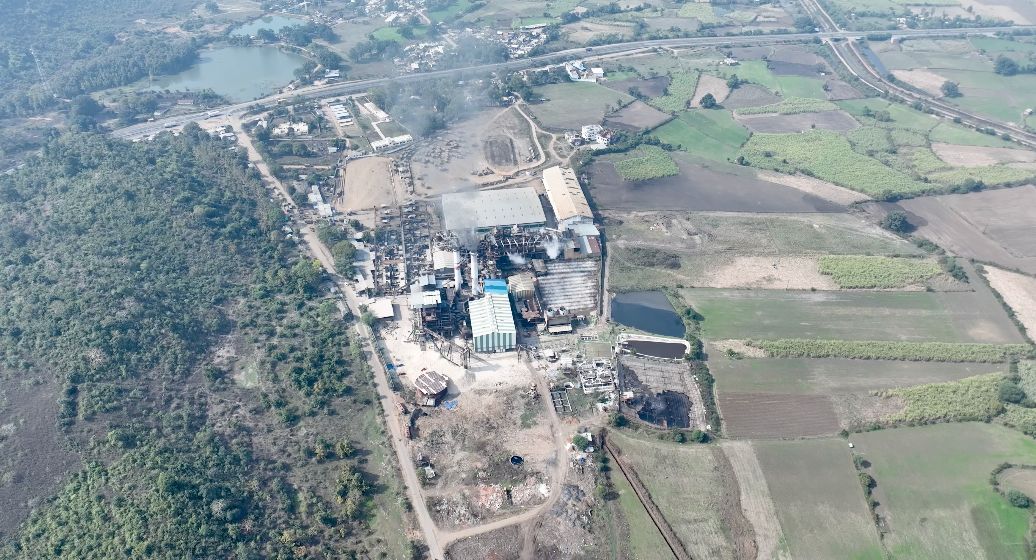
Adding biogas does not require a new supply chain. It requires us to buy one more thing from people we already buy from — and to pay for material they currently have no market for.
What that changes on the ground
- 01 A farmer who burned his cane trash because clearing it cost more than it was worth now has a buyer for it.
- 02 The truck that delivers cane to the mill need not return empty — it can carry organic manure back to the village.
- 03 Our harvesting and baling equipment serves the sugar season and the residue season, rather than standing idle half the year.
- 04 One relationship, one payment system, one set of field staff, covering cane, grain and residue.